A site visit checklist for a clearer construction estimate
A good estimate starts before you open the numbers. Here is what to capture on site so you can build a clearer breakdown back at the desk.

Published · Updated
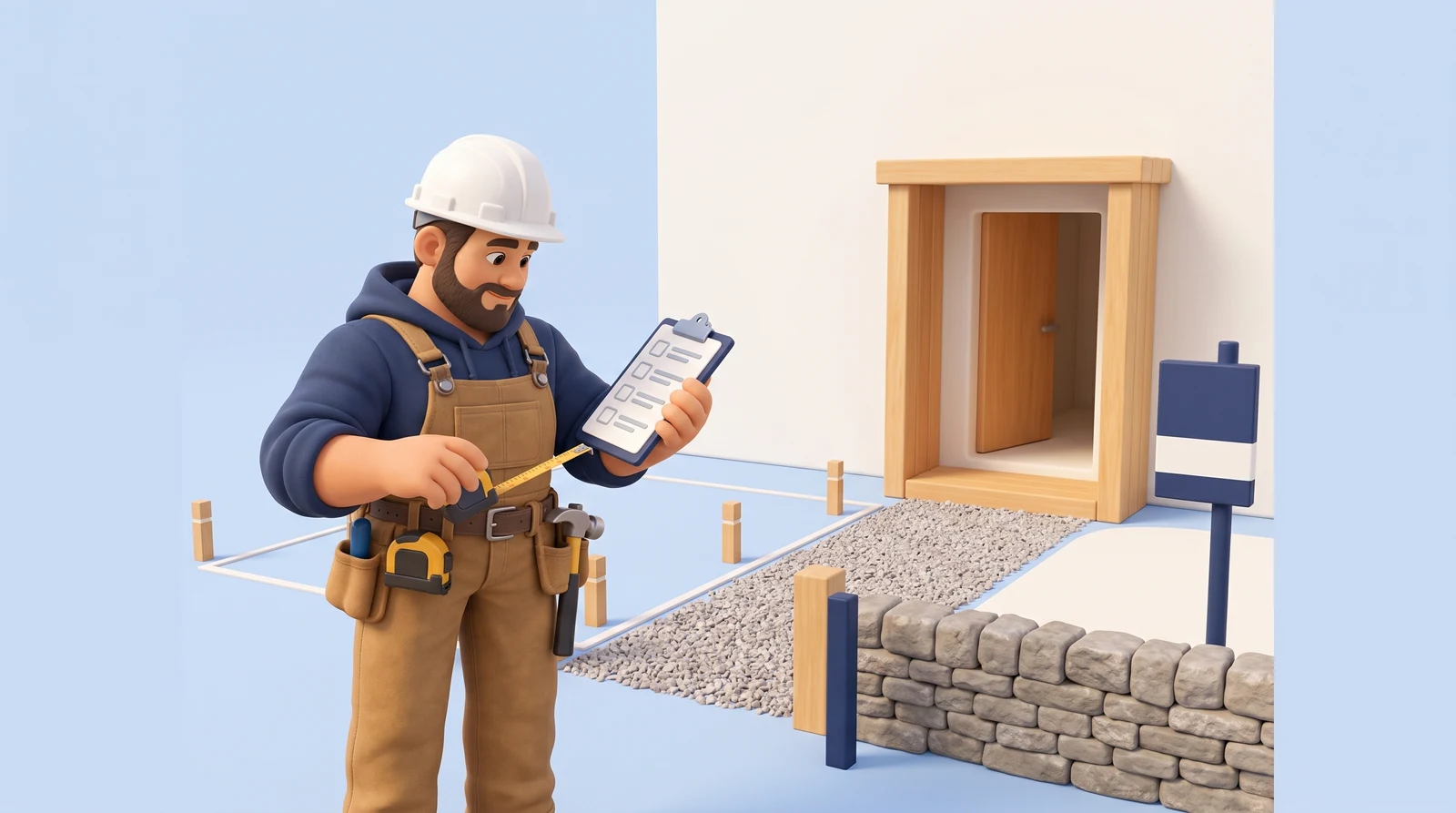
Before you start
- Record the work area and the access route separately.
- Keep measured facts separate from assumptions.
- Leave the visit with a short list of questions to resolve.
A useful estimating site visit should leave you with more than a few photographs and a rough measurement. You need a record of what the client wants, what you can see, what you have measured and what still needs checking.
Use this checklist as a starting point and adapt it to the trade and the job. Keep the notes in the same order each time so they are easier to turn into an estimate.
Confirm the work the client expects
Ask the client to walk through the job with you. Record each work area separately, including the finish they expect and any items they plan to supply themselves. A request to “sort out the spare room” needs more detail before it can become an estimate.
For each area, write down:
- The work to be completed and the intended finished result.
- Existing items to retain, protect, remove or replace.
- Materials or finishes already chosen, including product references where available.
- Work the client expects another trade to complete.
- Decisions that are still open.
Read the outline back to the client before moving on. This is a useful opportunity to spot different expectations without trying to settle the whole quote on the doorstep.
Capture measurements you can follow later
Label measurements by room, elevation or work area. Include the units and a simple sketch where it helps. Record openings, changes in level and awkward shapes rather than relying on one overall dimension.
For example, a decorating note might include each wall's length and height, the openings and the surfaces that need preparation. Separate the measured area from any allowance you later use for ordering materials.
Mark measurements you could not take. An inaccessible section is an unanswered question, not a reason to invent a dimension. Take photographs with the client's permission and avoid including personal information that is unrelated to the job.
Walk the access and delivery route
The work area is only part of the site. Follow the route materials, tools and removed items will take.
- Where can a delivery vehicle stop, and what needs confirming?
- Are there stairs, narrow doorways or shared access areas?
- Where could materials be stored without blocking the site?
- What existing surfaces need protection?
- Are there working-hour restrictions or occupied areas to plan around?
Record these as observations and follow-up questions. Avoid assuming that a space is available just because it is empty during the visit.
Separate known conditions from unknowns
Visible damage, uneven surfaces and restricted access can affect the work you need to include. Write down what you observed without presenting an unverified cause as a fact.
A useful note is “existing substrate not visible behind the fitted unit; inspect after removal.” It tells you exactly what remains uncertain.
If a decision needs an appropriate specialist, product information or another visit, record that next step. Keep it visible when you write the scope of work.
Finish with a follow-up list
Before leaving, list the information needed to complete the estimate: missing measurements, chosen finishes, supplier details, access arrangements and responsibilities for other work. Give each item an owner so it is clear who is finding the answer.
Back at the desk, group your notes into scope, materials, labour and site arrangements. Build your material quantity list from the recorded measurements, keeping assumptions easy to review.
This is also the point where good site notes pay off. In Construction Job Estimator, you can describe the job by voice or text, add your site photos and get a working estimate. It pulls in real-time material prices from local suppliers and puts materials, labour and other job costs in one place. You can see the quantities, prices and labour behind each figure and adjust any of them, so you can check the estimate against your recorded measurements and resolve open questions before sending it.